
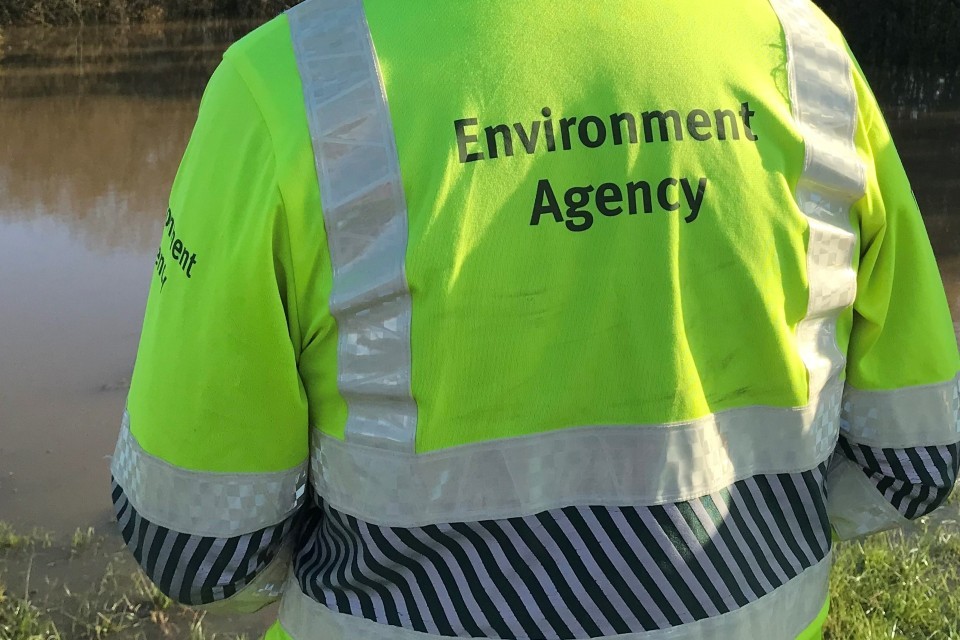
The recent extreme weather is having a severe impact on our environment and affecting water supplies and food production, the National Drought Group heard yesterday.
Wildfires have ripped through several areas, including dozens of delicate protected sites, and prime agricultural land.
The third heatwave of the year has seen ponds and wetlands dry out, which will impact bird breeding, while some rivers have dried up in places.
A lack of July rainfall, combined with the heat, is also putting pressure on public supplies – with demand for water soaring up to 30% on the hottest days.
Seven water companies have now implemented or announced future temporary use bans for 23 million customers to protect the environment and reduce the strain on their treatment works and storage during peak demand.
Farmers have had to begin their harvests early, with warnings that cereal yields will be lower than expected.
As of yesterday (Monday 20th July), eight areas across England were in prolonged dry weather – the stage before drought.
Ongoing work by National Drought Group members has recently increased, including heightened incident response, additional monitoring, and more cross-sector and public communication.
Helen Wakeham, Chair of the National Drought Group and Director of Water at the Environment Agency, said:
Dry weather depletes our water, while the hot conditions mean we use more of it. This is a difficult combination, and we are seeing the effects on our farmers, our wildlife, and the amount available for public and business use.
All sectors are taking action, and we are grateful to the public for following the restrictions, where in place, to make sure there is enough water for everyone this summer.
We want everyone to stay safe and hydrated during the hot weather but every drop we can save is a drop more for nature and agriculture.
The group – which includes the Met Office, government, regulators, water companies, farmers, Canal & River Trust, anglers and conservation experts – met yesterday following the recent heatwave, which saw 12 consecutive days of temperatures above 30C.
England has only received 3% of its long-term average July rainfall, with the south and east of the country receiving nothing at all so far – the longest spell without rain since the mid-1990s.
Work by National Drought Group members includes:
-
The Environment Agency has carried out fish rescues, including trout, bullhead, and small salmon, as oxygen levels deplete when river levels reduce.
-
The Environment Agency is currently releasing water from strategic reservoirs at the top of the River Severn and from groundwaters in Shropshire to maintain flows for navigation, support the environment, and aid abstractors.
-
Water companies have stepped up action on finding and fixing leaks – which happen more in hot weather as pipes move underground when soils dry out.
-
Water companies are communicating with customers, offering advice and tips to use a little less water while explaining any restrictions in place.
-
The Environment Agency is carrying out more compliance checks on businesses to ensure everyone is using water fairly.
-
The Environment Agency is working closely with the National Farmers Union, particularly in East Anglia, making sure all abstractors understand the latest water resources position.
-
The Environment Agency continues to work with Government, including Defra and the Cabinet Office, on future drought response.
Wildfires have affected multiple areas, including two major incidents declared in major moorland blazes in the Peak District.
Rob Gazzard, Wildfire Adviser at the Forestry Commission, said:
Wildfires do not start themselves; they are started by people, often accidentally, and they can quickly get out of control in dry conditions.
Our soils and vegetation have lost so much moisture in this heat that any natural resistance to a fire has significantly reduced. Not only does it make vegetation more likely to burn, but it increases the intensity of fires once they start. This means fires take hold and spread quickly and are difficult to suppress.
The recent fires have had a devastating impact on some areas, particularly on new trees and the wildlife that shelter there.
The meeting heard about the impact both fires and hot, dry weather is having on agriculture and nature.
-
There have been 53 recorded wildfires this year so far at Sites of Special Scientific Interest. (SSSI), including Dovestone and Tintwistle in the Peak District.
-
Lower water levels, and a lack of rainfall to top up spawning pools, significantly impact the breeding success of species such as natterjack toads.
-
Migratory fish, such as Atlantic salmon, are unable to move upstream because of reduced river flows.
-
Waters surrounding the UK have also been experiencing marine heatwave conditions, with sea surface temperatures remaining well above average across many coastal areas.
-
There have been 107 confirmed algal bloom incidents.
-
Harvests have begun early and there is an increased risk of fires breaking out in combine harvesters because of the heat.
-
The high heat is also causing moisture issues for cereals while spring barley yields are expected to be impacted by a lack of rain earlier in the season.
-
Some farmers in East Anglia have also had to stop abstracting water from local rivers because of the reduced flows caused by limited rainfall.
Oliver Harmar, Chief Strategy Officer at Natural England, said:
As well as serious impacts for people, our wonderful wildlife is suffering as the effects of climate change take hold, with the increased likelihood of drought and wildfires.
These impacts are felt long after the weather cools down, as we see reduced populations of wetland birds and amphibians.
Habitat restoration, including more wetlands, bogs and ponds, will help us make nature more resilient to the impacts of these weather extremes.
Paul Tompkins, Deputy President at the National Farmers Union, said:
Farmers and growers across the country are working around the clock to harvest crops which have come early, keep fruit and vegetables watered, and care for their livestock.
Parts of the country, particularly in the east and south, have seen exceptionally low rainfall this spring and summer, creating real challenges for farm businesses. For many arable farmers, this could be another difficult and expensive harvest after extreme weather impacts in both 2024 and 2025 which saw both drought and flood.
To help farmers adapt, we must strengthen resilience to climate volatility. That means a more responsive abstraction licensing system, a consistent positive approach in planning to make building reservoirs easier, which will lead to investment in on-farm water storage.
The exceptionally wet winter provided an initial buffer, but the intensity and longevity of the hot and dry weather is now taking a toll.
-
No areas are currently in drought but hot, dry weather increases the risk of a flash drought as we saw in 2022.
-
The Environment Agency is continuing to monitor impacts and whether any areas meet the criteria to be declared in drought.
-
Prolonged dry weather has been declared in: East Anglia, West Midlands, Devon, Cornwall & Isles of Scilly, Lincolnshire & Northamptonshire, Hertfordshire & London, Wessex, Thames, Solent & the South Downs.
-
Only 13% of rivers are classed at normal levels for this time of year. The majority are lower than normal, including the Rivers Avon (Hampshire), Cam, Derwent (Yorkshire), Swale, Tone, Wye and Yare, which are exceptionally low.
-
National reservoir storage is 78.8%, around 5% lower than long-term average. Six reservoirs are classed as notably low – including Wimbleball, Grafham and Hanningfield and The Lower Thames group. Blagdon is exceptionally low.
-
Groundwater levels are undergoing their seasonal decline, but notably low levels have been reported in the Cotswolds and Wessex Downs.
Rainfall totals for the month of July to date ranged from 9% of the long-term average in north-west England to nothing in east and south-east England. The dry weather is expected to continue for most parts of England during the rest of the month, but the temperatures are likely to cool.
Will Lang, Chief Meteorologist at the Met Office, said:
Much of England has experienced a notably warm and dry first half of summer, with July particularly dry and some locations recording little or no rainfall so far this month. The UK has already seen three heatwaves in 2026 and, while some rain is possible at times, the overall outlook remains for largely settled conditions.
There are some signs of more changeable weather at times into early August, which may bring rain to some areas. However, confidence in the detail remains low, and any rainfall, particularly across southern parts of the UK, is unlikely to be widespread or substantial. Many areas are likely to continue experiencing prevailing dry conditions over the coming weeks, especially across southern England. It therefore remains uncertain how much meaningful rainfall will reach those areas that have been driest in recent weeks.
The Met Office will continue to work closely with partners across the water sector, providing forecasts and guidance to support drought planning and response activities.
In the last two weeks, Affinity Water, Anglian Water, Cambridge Water, Southern Water, South East Water, Thames Water and South West Water have announced Temporary Use Bans (TUB) across either all or part of their region. Hosepipes are restricted but watering cans and buckets can still be used. If people with disabilities or health issues are living in an area covered by a TUB, they can contact their local water company about their situation.
A hosepipe can use 1,000 litres an hour – which is more than a family-of-four will use in a day. Restrictions on their use form an essential part of drought planning and recent research found most people support a ban if there is a compelling reason.
David Henderson, Water UK Chief Executive, said:
We are incredibly grateful to customers for doing their bit to protect our environment and preserve our water supplies.
The last thing water companies want to do is restrict the amount of water people can use but demand is at unprecedented levels following the warmest spring and June on record.
Water companies are doing everything they can to ensure the taps keep flowing with hundreds of technicians out repairing leaks and water being moved across regions to relieve the driest areas.